Spine Tattoo Ideas: 15 Designs for a Beautiful Vertical Piece
The spine gives a tattoo a natural vertical path. The best design for it might be a single fine line—or a sequence of shapes with room between them.
When you search for spine tattoo ideas, most references look straight-on and perfectly still. Your back is neither a flat page nor still all day. A useful starting point is to decide whether you want a design that follows the center line closely, sits beside it, or uses a few separate elements to suggest a vertical rhythm.
Below are 15 directions to discuss with a tattoo artist. Think of them as composition prompts: the final drawing should respond to your body, preferred size and the artist’s advice about detail.
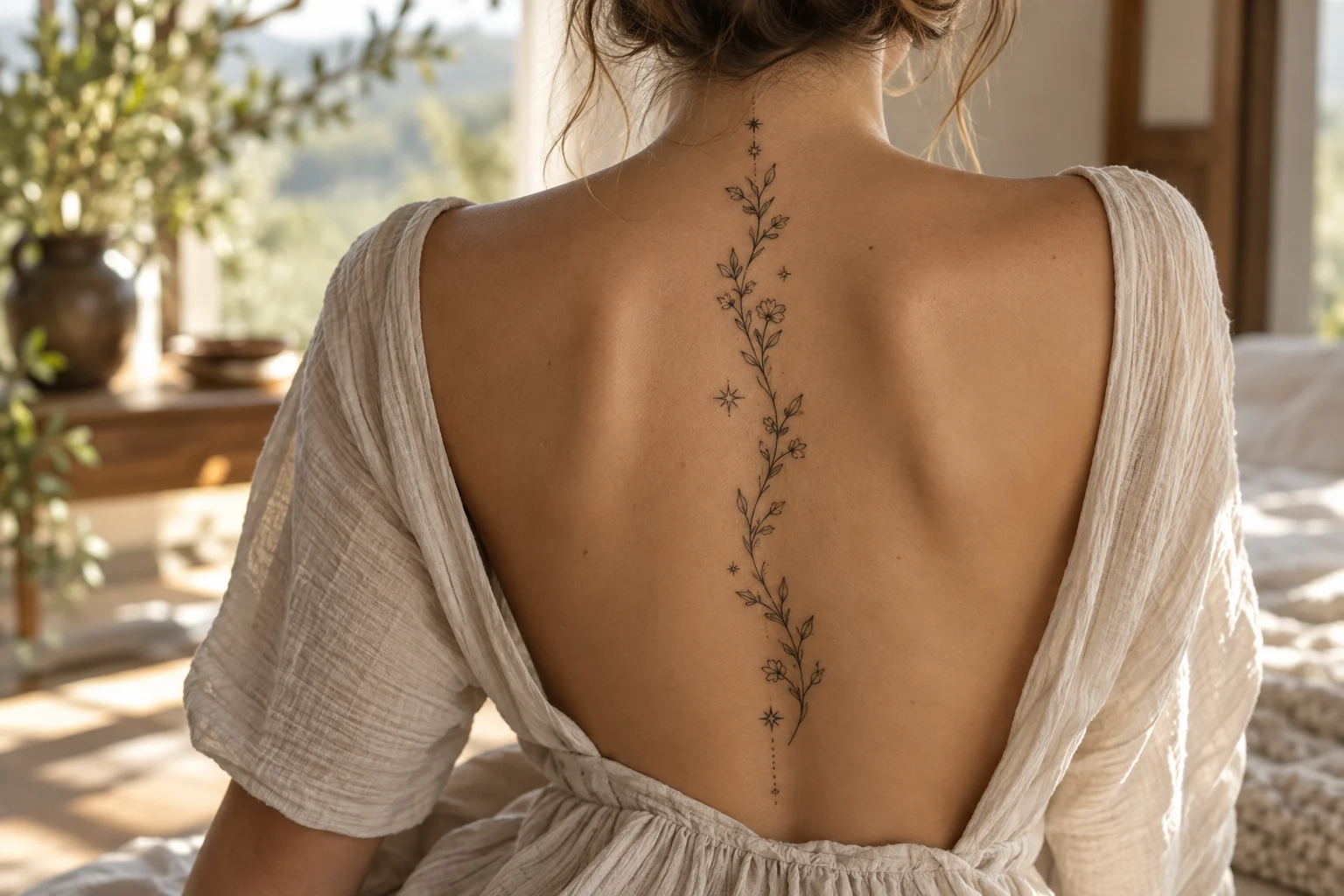
Ideas that follow the line of the back
1. A loose botanical stem
One winding stem can move gently down the back, with a few leaves rather than a dense bouquet. Let the curve feel natural; a rigid ruler-straight vine can fight the body's shape.
2. A fern frond
A fern gives you repeating leaflets along one main line. Keep the spacing legible at the intended size, and choose whether the frond is symmetrical or turns slightly as it travels.
3. A minimal crescent trail
A series of small moons can create a quiet vertical sequence. They may all face the same direction, or gradually turn to suggest movement. Leave comfortable gaps between each one.
4. A single calligraphic curve
A loose brush-like stroke is less literal than a flower or symbol. This direction depends on clean edges and an artist whose portfolio shows confident, healed linework.
5. A climbing insect or serpent
A narrow subject with a clear silhouette can make the placement feel intentional. Keep tiny markings secondary so the main outline remains readable as the back bends or turns.
Ideas built from separate marks
Star map
Scatter a few star shapes along a loose axis, with one larger point as an anchor. It can look airy without turning into a dotted line.
Three small blooms
Use different flower shapes or stages of opening. Varying their angle gives the sequence a hand-drawn quality.
Ornamental drops
Fine curves, dots and one pendant-like focal point can echo decorative jewelry. Keep the cultural source of any traditional pattern in mind.
Birds in ascent
Two or three birds at different scales suggest flight. A slight turn between them gives the design more movement than identical stamps.
Abstract punctuation
Dots, short dashes and one clean geometric shape can form a personal code. Decide which element should catch the eye first.
Make a statement without crowding the center
11. A fine-line ornamental column
Repeated arches or small petal shapes can frame a central path. A few deliberate changes in scale help avoid a mechanical chain of identical units.
12. A branch with a larger focal flower
Let one flower carry the visual weight, then use leaves or smaller buds to extend the silhouette above and below. The arrangement does not need to fill the entire back.
13. A celestial column
Combine a sun, crescent and a small scatter of stars. Assign one clear focal point and use the rest as supporting marks, with enough open skin around the design.
14. A ribbon-like abstract form
Two or three fluid bands can weave around one another without becoming a literal object. This is a good brief if you care more about movement and line than symbolism.
15. A custom story in chapters
Choose several symbols connected to a place, memory or change in your life. Ask your artist to create a sequence where each mark works alone and also belongs to the whole.
Choose the layout before you choose tiny details
| Layout | Visual feeling | Ask at your consultation |
|---|---|---|
| One continuous motif | Fluid and connected | Where should the design begin and end? |
| Separate motifs | Light, with visible breathing room | How will their spacing look from the side? |
| Centered ornament | Balanced and decorative | How will the stencil follow my natural center line? |
| Offset botanical | Organic and less formal | Where should the main flower sit? |
More spine layout inspiration
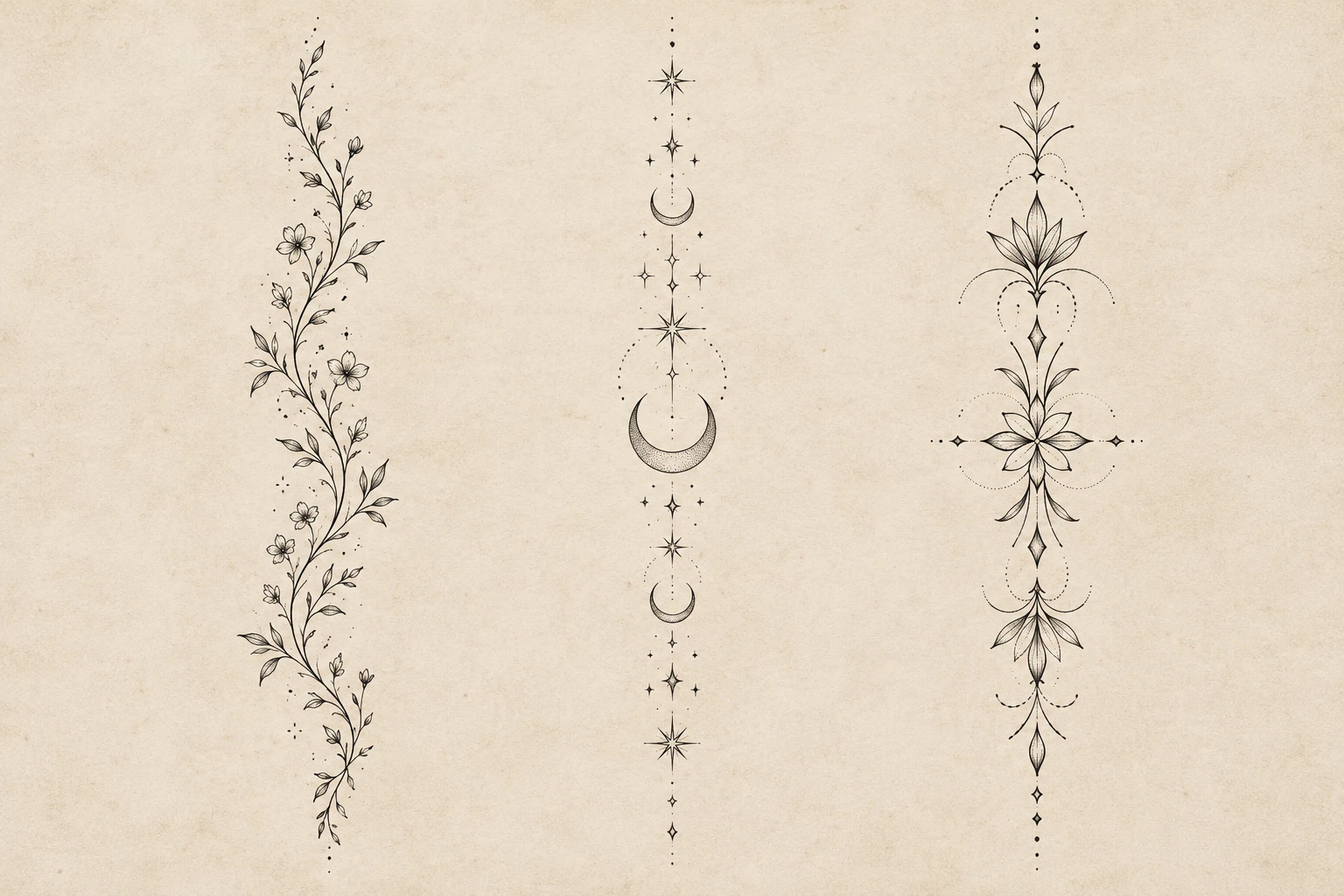
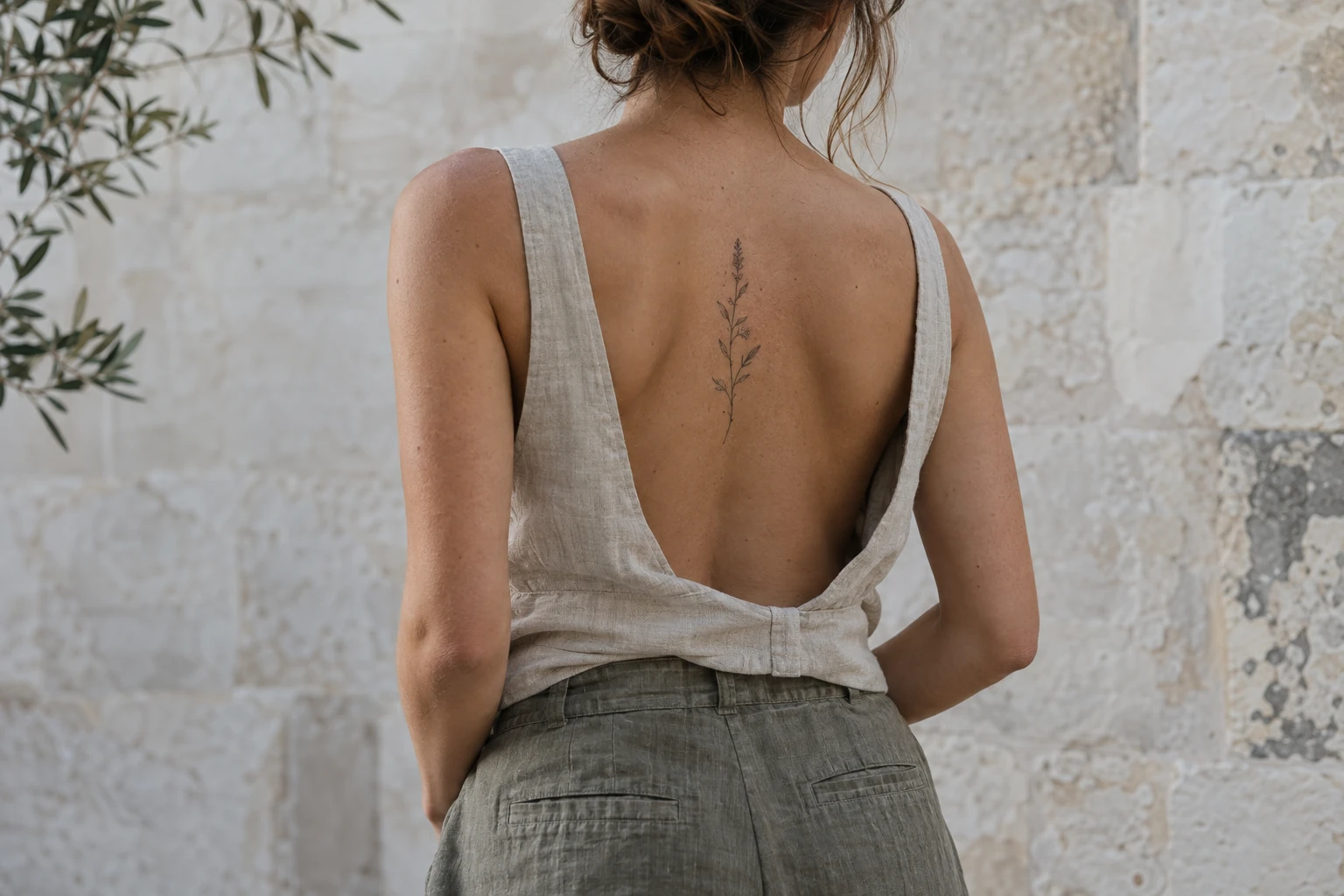
Stencil checks that are easy to overlook
Look at the stencil standing naturally, then sitting and turning slightly. Ask to see it from a normal viewing distance as well as in a close mirror. Confirm the start and end points, the width of the design and whether you want it visible with your usual tops.
Do not judge the tattoo by the stencil alone or assume a perfectly straight graphic will sit the same way on every back. Your artist can adjust the line and spacing to fit your anatomy. If you are comparing vertical styles, explore our fine-line floral ideas and ornamental tattoo gallery.
For further inspiration, see Felicidad Tattoo Studio’s spine tattoo design guide.