Cover-Up Tattoo Ideas: 10 Design Directions for Old Ink
A cover-up starts with the tattoo you already have. Its darkest areas, outline and placement help determine what can go over it.
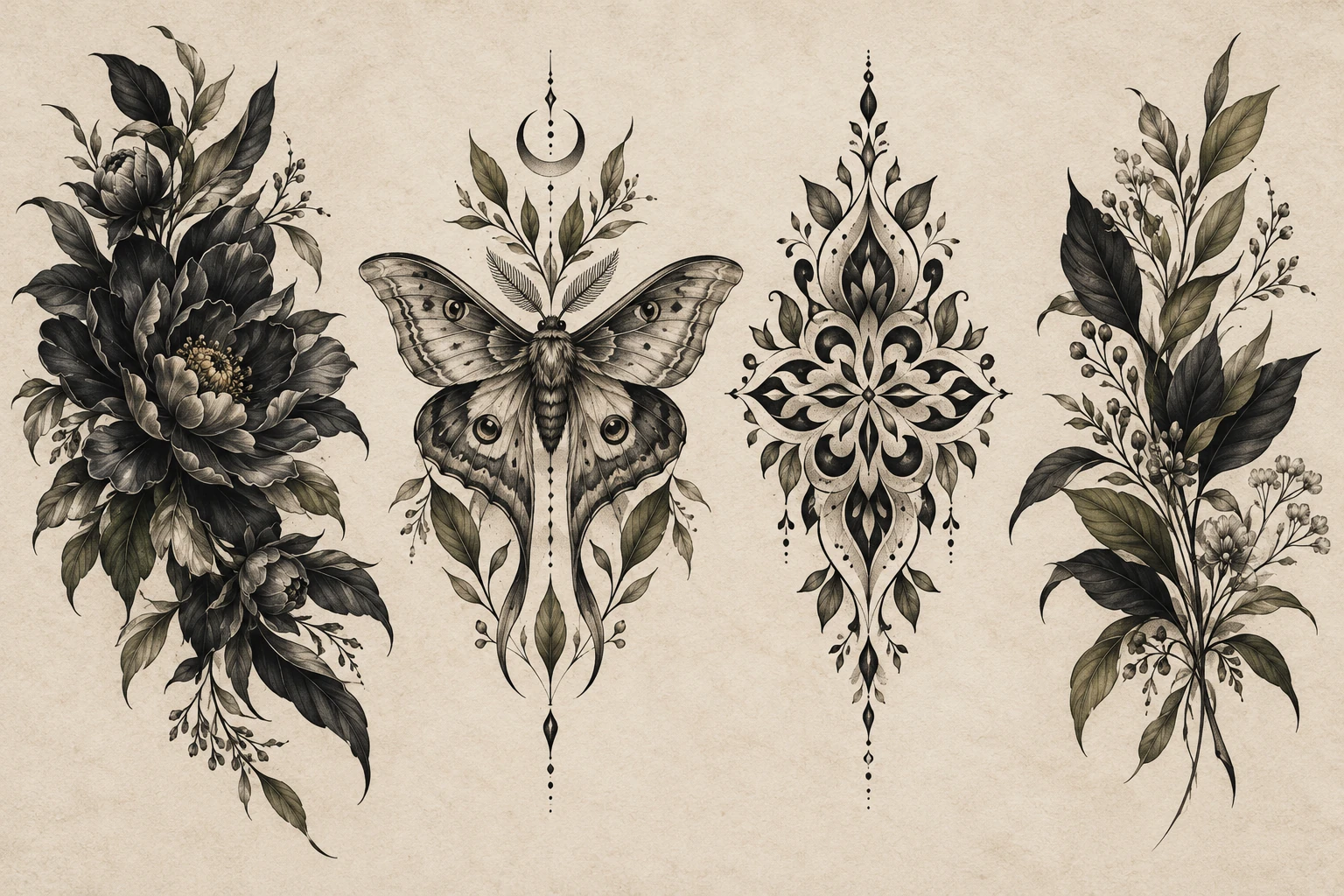
If you are looking for cover-up tattoo ideas, it helps to collect references—but a picture of a peony or a blackwork sleeve cannot tell you what will work over your specific ink. The practical first step is a conversation with an artist who has done cover-ups and can assess the existing piece in person or from clear photographs.
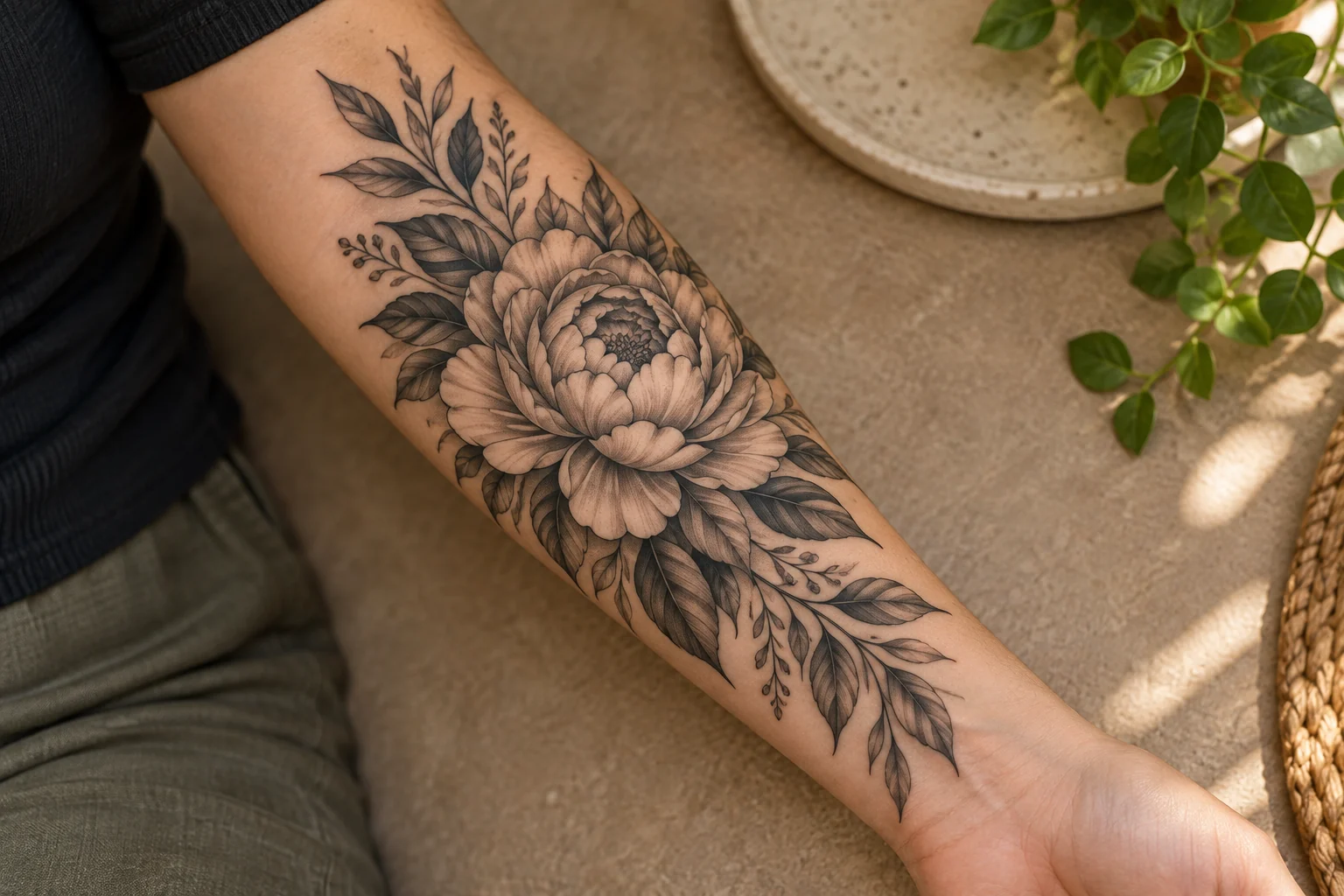
Bring these three things: a clear photo of the existing tattoo in natural light, a note about its age and any past touch-ups, and two or three new styles you would actually want to wear.
First, read the old tattoo like a map
Darkness
Where are the heaviest black or saturated color areas? A new design may need darker shapes in those exact places.
Silhouette
Is the old tattoo long, round, geometric or text-based? Its overall shape affects the outline of a new composition.
Placement
How does it sit on the body, and how much surrounding space could an artist use to make the new piece flow?
10 directions to discuss with a cover-up artist
Reference ideas and a planning conversation
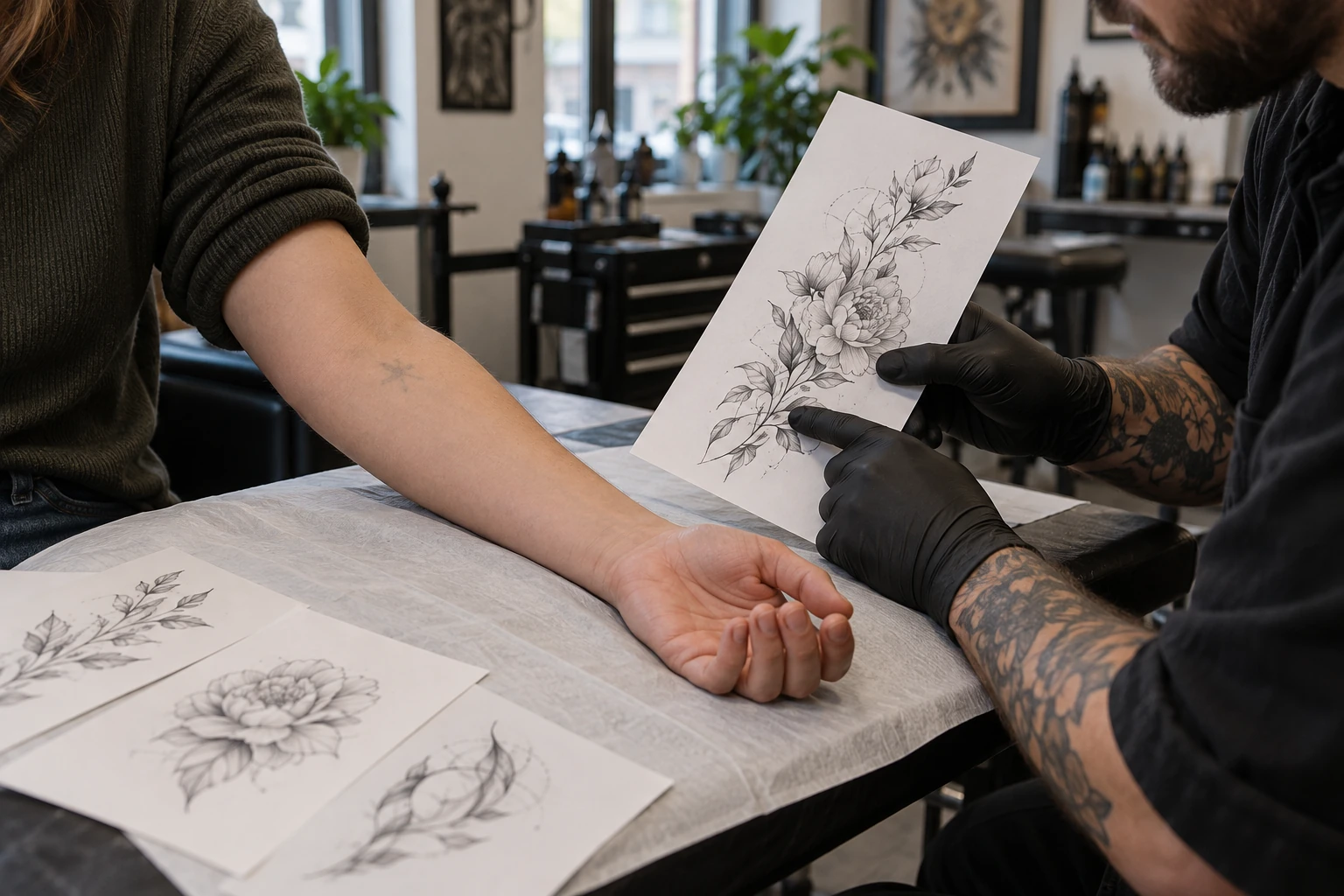
What a cover-up cannot promise
A cover-up is not an eraser. The new drawing may need to be larger or darker than your first choice, and your artist may say a particular style will not work over the old ink. Some people ask a qualified laser professional about lightening first; that decision depends on your skin, tattoo and goals. Get separate professional advice before choosing any laser treatment.
Use this consultation checklist
- Take daylight photos from straight on and at a slight angle. Include one with the full body area visible.
- Tell the artist when you got the tattoo and whether it has been retouched or treated before.
- Show what you like in each reference—shape, subject, shading or palette—not only the overall image.
- Ask which parts will need to be darker and how much larger the new piece might be.
- Ask to see healed examples of the artist’s cover-up work.
- Wait for a custom drawing based on your actual tattoo before deciding. Generic mockups cannot assess the old ink on your skin.
Choose a new tattoo you would want anyway
The most satisfying cover-up begins with a design you like for its own sake. Bring flexibility about the final scale and details, but be clear about what you want the new tattoo to feel like. Your artist can then explain which ideas fit the old ink and which would ask too much from the design.
If you are drawn to florals, see our fine-line floral tattoo guide. For ornamental patterns, explore jewelry-inspired tattoo ideas.
For another artist’s perspective on cover-up planning, see Apollo Tattoo’s cover-up design guide.