Lace Tattoo Ideas: Cuffs, Moths & Shoulder Details That Feel Airy
Lace tattoos borrow their appeal from fabric: an airy edge, a repeated rhythm and the feeling of something delicate resting on skin. The trick is to keep that softness without turning every millimeter into detail.
There is no single lace tattoo formula. A cuff can feel graphic, a moth can feel romantic, and a shoulder arc can echo the edge of a garment. Start with the overall shape you want to see from a few steps away. The little loops should support that shape, not compete with it.
The cuff: for a clean, jewelry-like shape
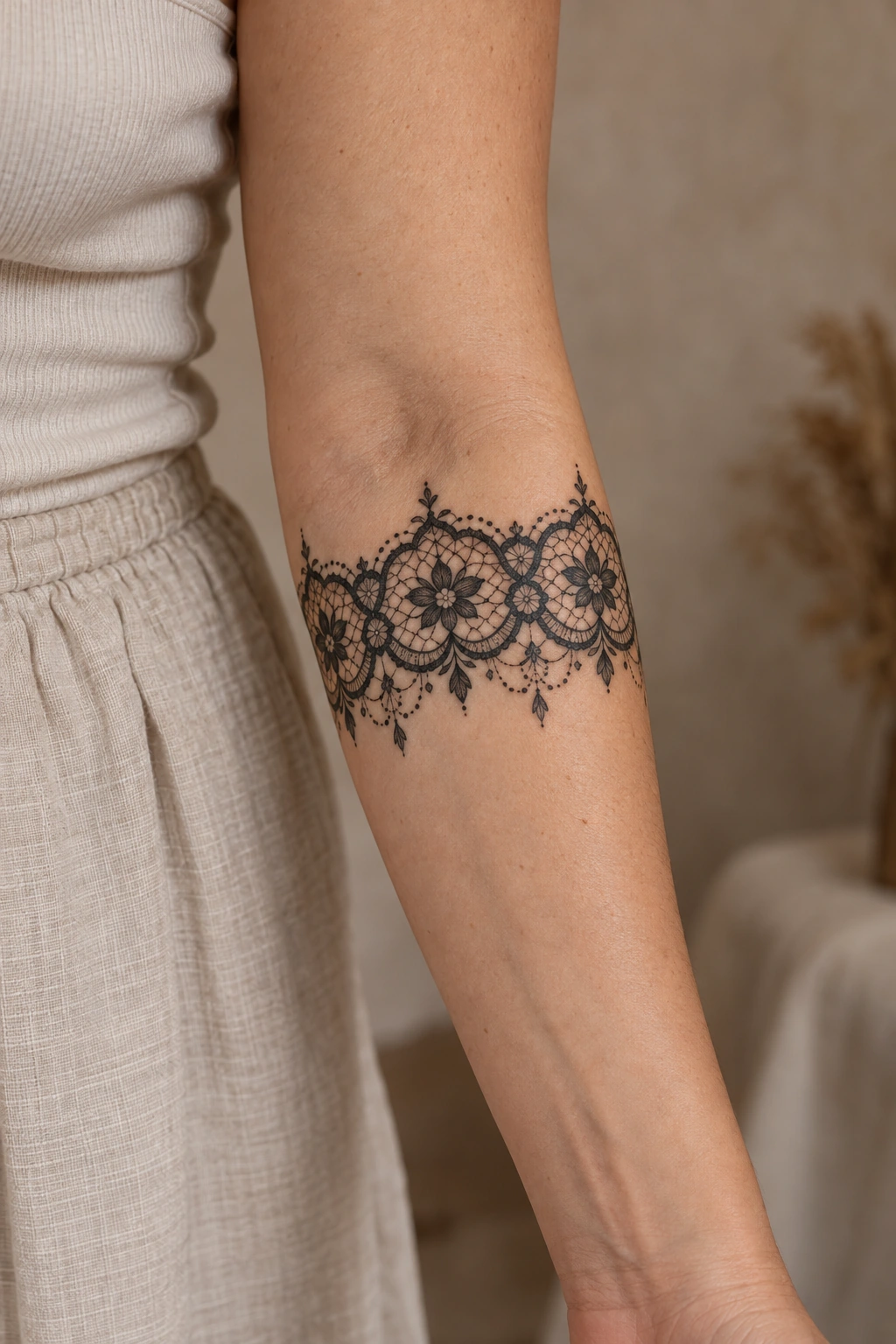
This direction works like a soft border around the arm. Let a repeated scallop create the outline, then use a few larger floral shapes inside it. You do not need to reproduce the threads of an actual piece of lace for the reference to be recognizable.
The main decision is how much of the arm to wrap. A fully encircling cuff, a partial band and an open-ended arc have different visual effects. Ask the artist to photograph the stencil from several angles so the connection points do not become an afterthought.
A useful design brief: “A light cuff with visible skin between the flowers and a clean scalloped edge.” If a bracelet usually sits nearby, consider whether you want it to overlap the tattoo or remain separate.
The moth: for romance with a stronger outline
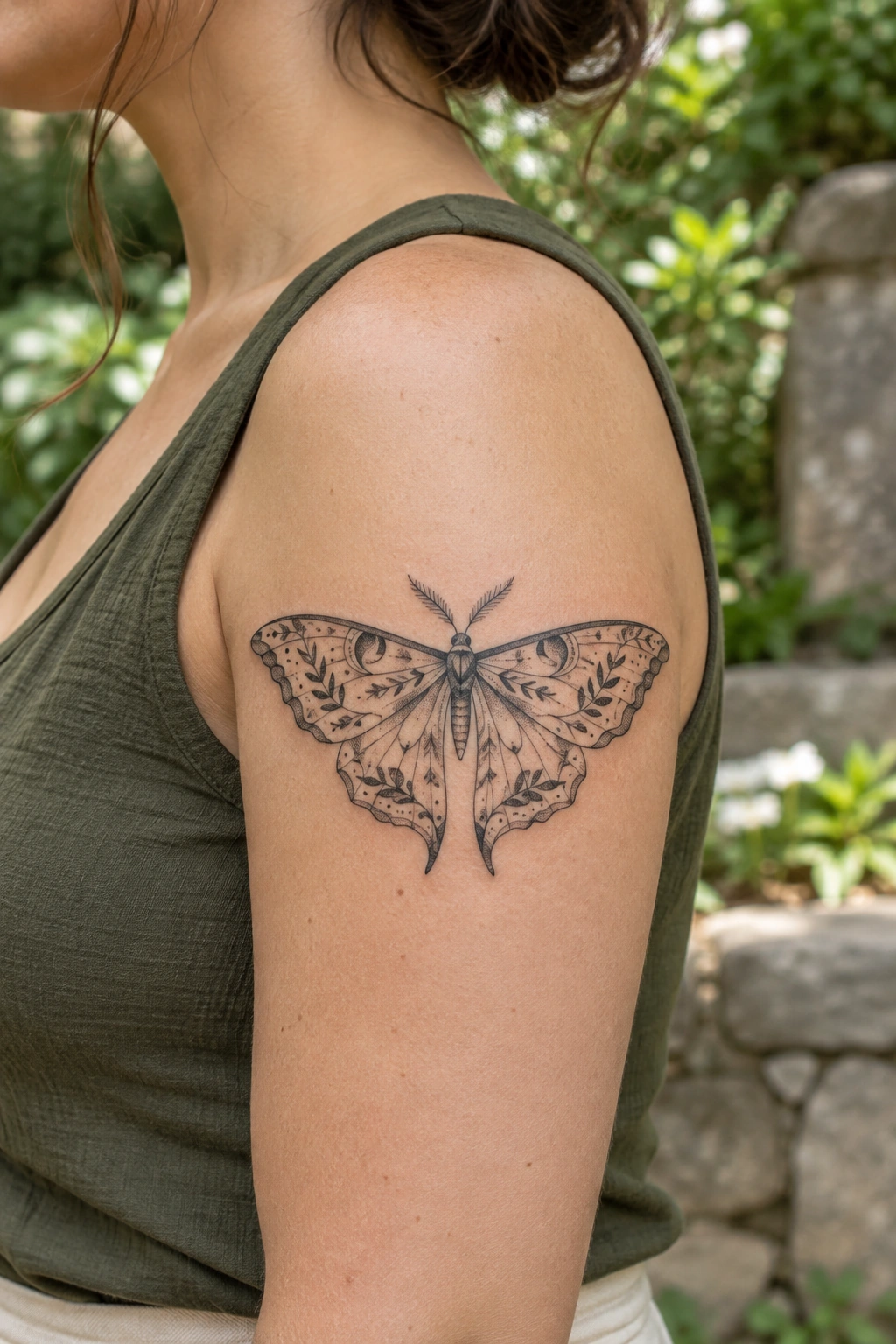
A moth gives lace a framework. The wings can hold curved windows, petal-like openings and a small amount of dotwork, while the outer silhouette stays crisp. It is especially useful if an all-over lace pattern feels too decorative on its own.
Choose a few broad shapes for the wings instead of copying an intricate textile mesh. The body and antennae need their own space. A slightly larger composition may let the artist preserve those separations more comfortably than an extremely tiny version.
Change the mood: pale, open wings feel airy; a stronger black edge feels more gothic. Ask your tattooer to show the difference in a sketch. Color is optional—the contrast between ink and skin may already provide all the texture you want.
The shoulder arc: for a pattern that follows the body
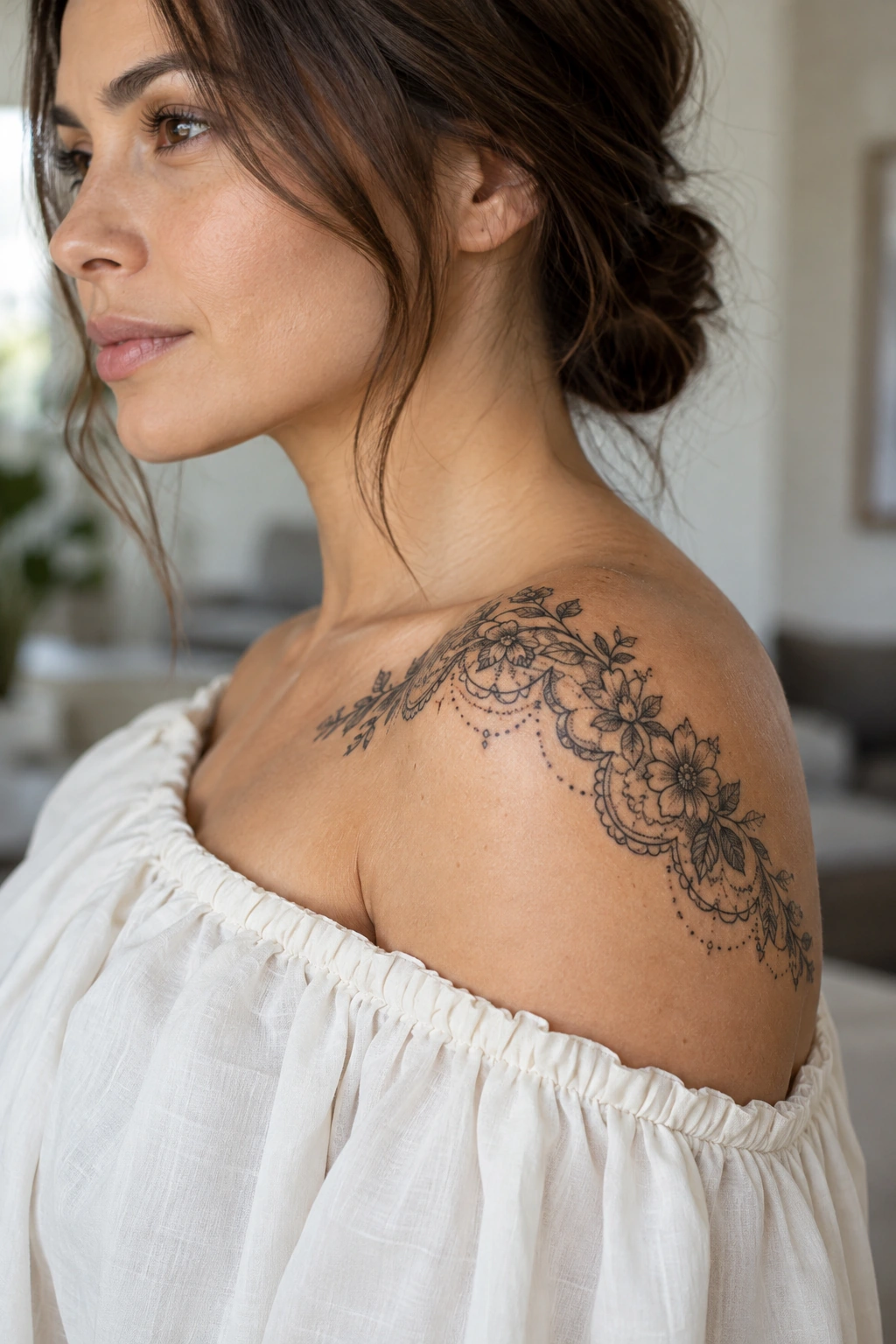
A shoulder piece is less about repeating a perfectly straight band and more about following a curve. A floral lace arc can begin near the upper arm, rise over the shoulder and taper before it reaches the collarbone. The ends should look intentional rather than abruptly cut off.
Have the stencil checked with the arm down, lifted and turned slightly forward. Also look at it with a neckline you wear often. A design can feel quite different when its top edge sits just above clothing compared with when the whole arc is visible.
The editing rule: make one part the focus. A larger flower near the shoulder’s high point and lighter scallops toward the ends can create a graceful rhythm without making every section equally busy.
Three decisions that matter more than extra detail
- How much skin should remain open?
- Ask to see the design as a black-and-white silhouette. The spaces are part of the composition, especially when the reference is an airy fabric.
- Which pattern can the artist draw confidently?
- Look for healed examples of decorative linework in their portfolio. Fresh photos show crispness; healed examples help you judge their approach to spacing and line weight.
- What is the smallest sensible size?
- There is no universal measurement. It depends on the drawing, placement and artist’s technique. Let the tattooer simplify or enlarge the pattern instead of insisting on every loop at miniature scale.
Bring lace references to explain the texture you enjoy, but ask for an original drawing rather than a direct tracing of a finished tattoo. If you like the jewelry effect more than the textile texture, compare these options with our ornamental tattoo ideas. The distinction helps you explain whether you want a soft fabric edge or a more structured decorative piece.
Style context: Pinterest’s 2026 “Laced Up” forecast highlights lace across style and design. Our tattoo concepts interpret that wider aesthetic through open patterns and fabric-inspired edges.