Crochet Pumpkin Decor Ideas: Two Cozy Displays for a Small Home
Crochet pumpkins bring the best part of autumn decorating into a small space: soft texture, warm color and something you can pack away for another year. They do not need a whole mantel or a room full of seasonal accessories to feel intentional.
The easiest way to make them work with your home is to decide where they will live before choosing yarn colors. A tray on a sideboard can handle a small group. A narrow shelf may only need two pieces and a little empty space. That decision also helps you choose a practical finished size if you plan to make them yourself.
A tray arrangement with three related colors
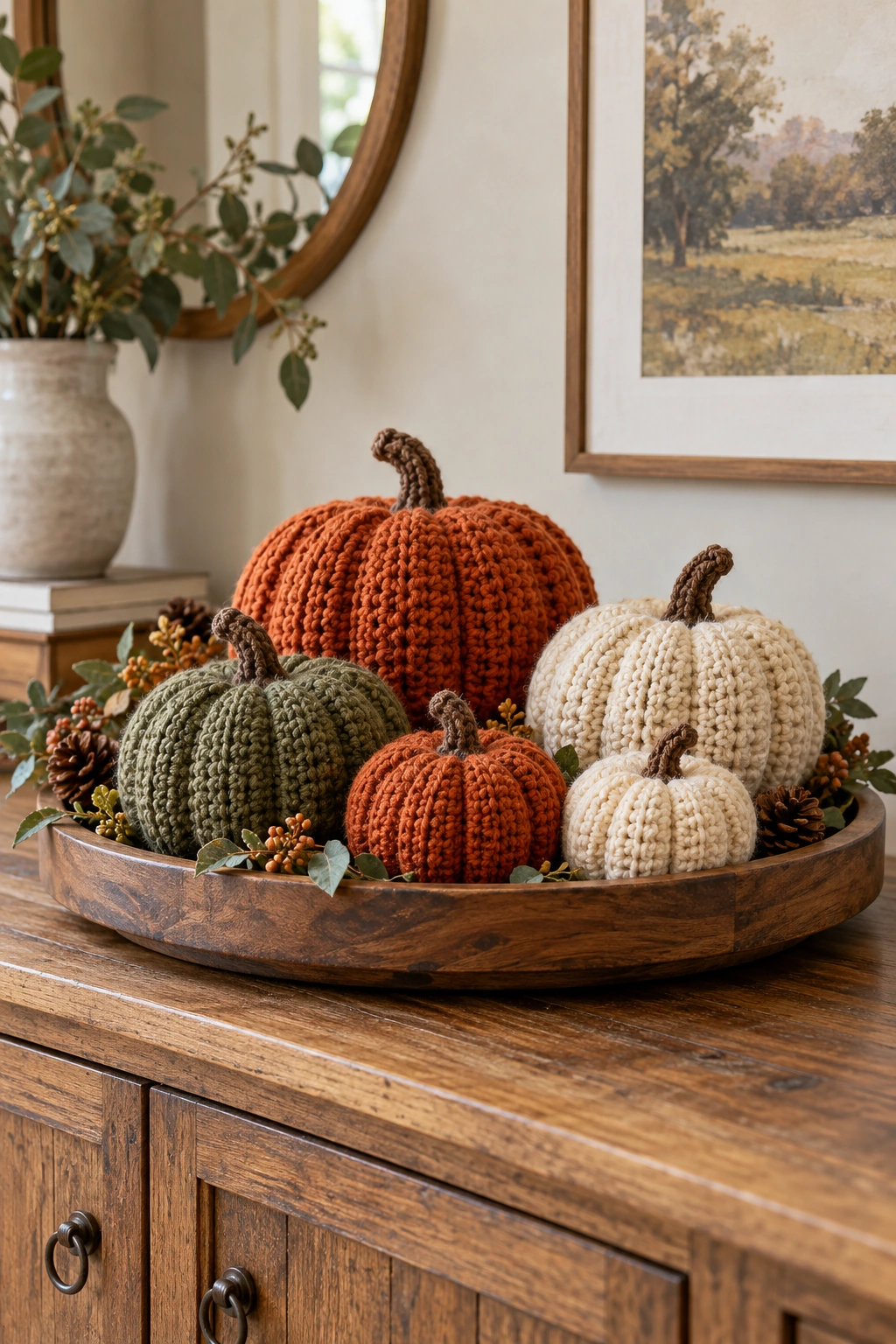
Use burnt orange as the seasonal note, cream as the lightest piece and moss green to connect the group to plants or other colors already in the room. The pumpkins do not need to be identical. A little variation in height and width makes the group feel collected rather than packaged.
Start with the largest pumpkin slightly off-center. Bring the smaller ones closer to its base, then step back. If you cannot distinguish the shapes, move one forward or create a small gap. The goal is a group with a clear outline, not a pile of texture.
The finishing decision: use similar stems across the group. Simple brown yarn stems make different colors feel related. Avoid adding a different ribbon, leaf and decorative tag to every pumpkin; let the crochet surface supply the detail.
This arrangement can sit on a sideboard, an entry table or a coffee table where it will not obstruct everyday use. Keep the tray easy to lift so the surface is still practical to clean or clear.
A two-pumpkin shelf accent that leaves room to breathe
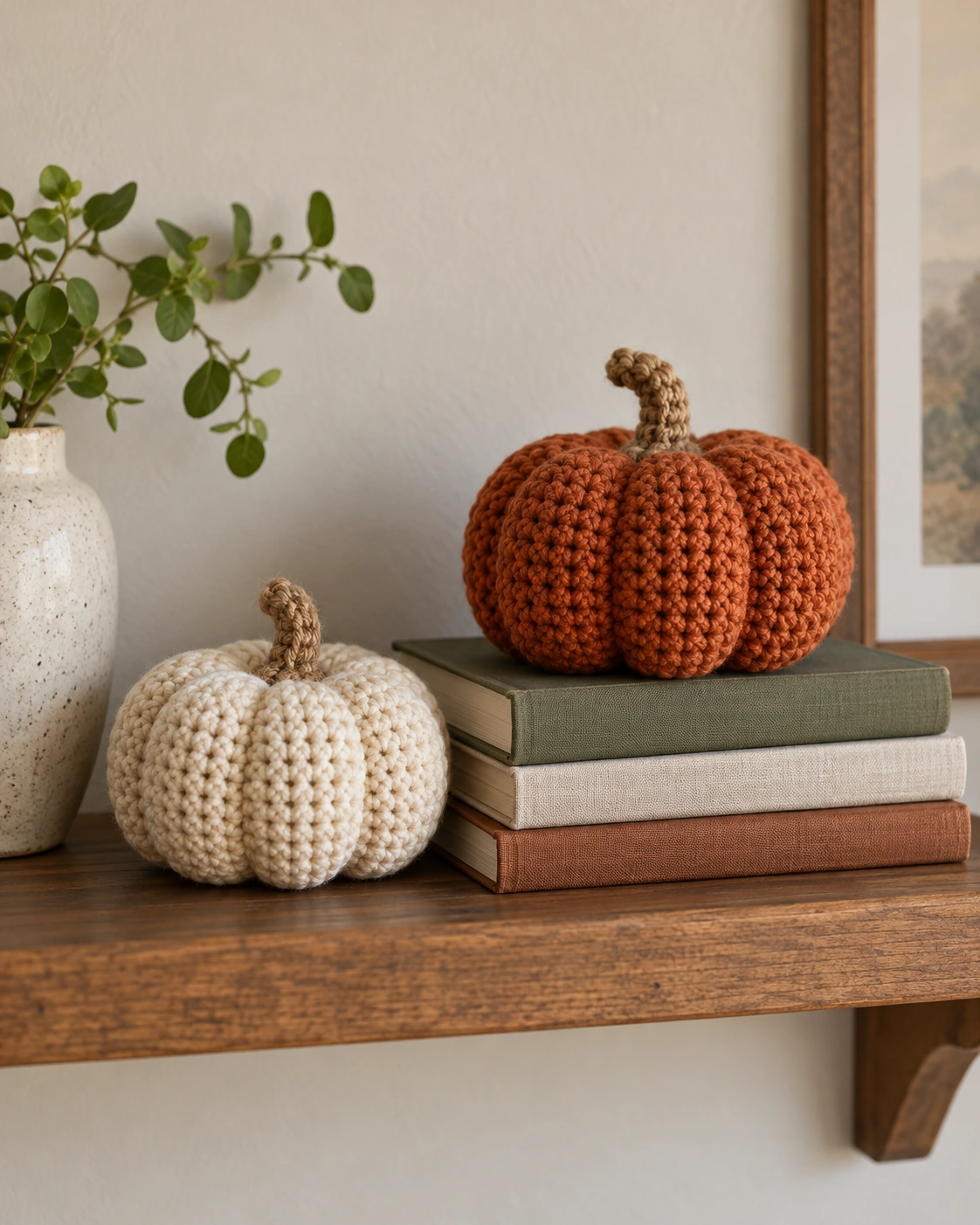
For a quieter look, choose cream and muted rust, then place the pair beside a short stack of books. One upright pumpkin and one lower, rounder shape can create a little rhythm without competing with everything else on the shelf.
Measure the shelf depth before you choose a pattern or buy a finished piece. A pumpkin can look small in a close-up photograph but still be too deep for the surface you have. Allow space around the stem so it does not press against the shelf above.
The editing test: remove one extra decorative object nearby. If the pumpkins become easier to notice, the display needed space rather than another accessory. A restrained arrangement can suit autumn without turning the whole room orange.
Want to make them? Choose the pattern before the yarn
A pumpkin is a useful small project, but the construction varies. Some designs begin as a rectangle that is joined and shaped; others are worked in rounds or create a flat appliqué. Read the finished dimensions and construction notes before deciding that two patterns will produce the same kind of decoration.
For a stuffed decorative pumpkin, Heart Hook Home’s pumpkin pattern offers three sizes and uses US crochet terms. Follow the designer’s stitch counts, yarn guidance and assembly instructions on the original page. Our photographs are styling concepts, so they are not proof of the exact finished result from that pattern.
- Check whether the pattern uses US or UK terms; stitch names are not interchangeable.
- Use the recommended yarn weight and hook as a starting point, then check the pattern’s size guidance.
- Keep enough matching yarn for seams, shaping and finishing, rather than using the final length on the body.
- Choose a securely attached stem and keep loose decorative pieces away from children or pets.
Store the texture so it stays pleasant next autumn
Follow the yarn or maker’s care instructions. Dust the pieces gently and let anything cleaned dry completely before storage. Use a box that protects the stems instead of forcing the pumpkins into a tightly packed bag.
These are soft decorations, so keep them away from candles, heaters and damp areas. Indoors, a small tray is usually easier to maintain than a doorstep display exposed to weather.
If you want a broader seasonal setting, our small-space Halloween decorating guide helps you choose where a few pieces can have the most impact. For the rest of the year, explore creating a home that feels like you.